
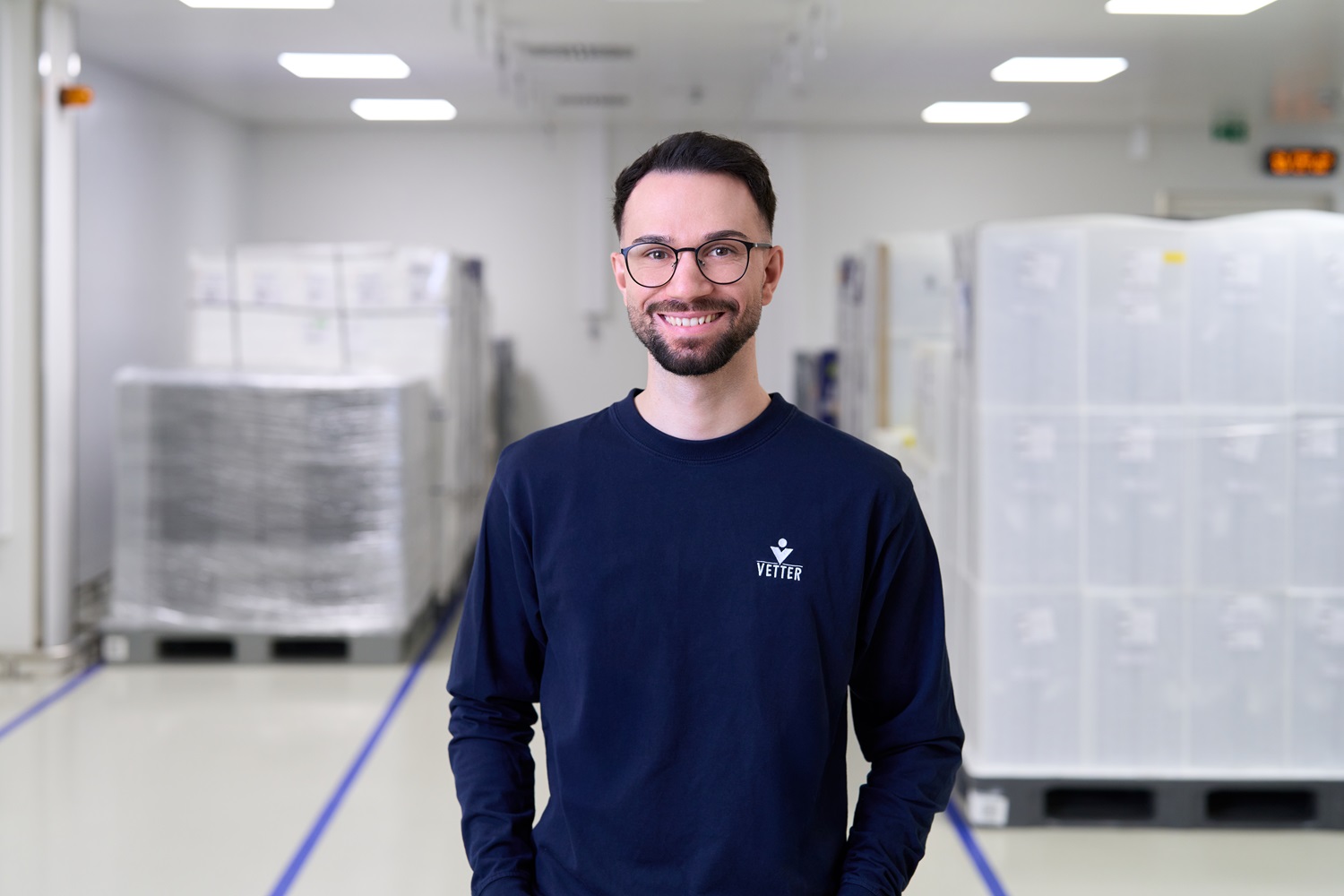
How I came to Vetter
Before joining Vetter, I did my apprenticeship as a Warehouse Logistics Specialist and then worked for two years at the company where I completed my training. At some point, I realized I wanted to try something new, ideally in an environment that placed a high value on structure, responsibility, and quality.
The final push came from my cousin, who was already working at Vetter. I applied the traditional way, had an interview, got accepted. Looking back, that was a lucky break. I knew my way around logistics, but the scale and standards here were all new to me.
Two areas, numerous tasks
The first thing I do when I arrive for my shift is look at where I've been assigned. There are two areas: the unclassified and the restricted access. The two are separated by an airlock. The restricted-access area has stricter hygiene rules, and there we wear special clothing. What I really like about my job is that there is no strict routine where every day is the same. Different truck deliveries arrive depending on the shift. The number of orders go up and down depending on the week, and that's what makes the work so interesting. And as for the salary? I'm very happy with it!
From the truck to the parking space
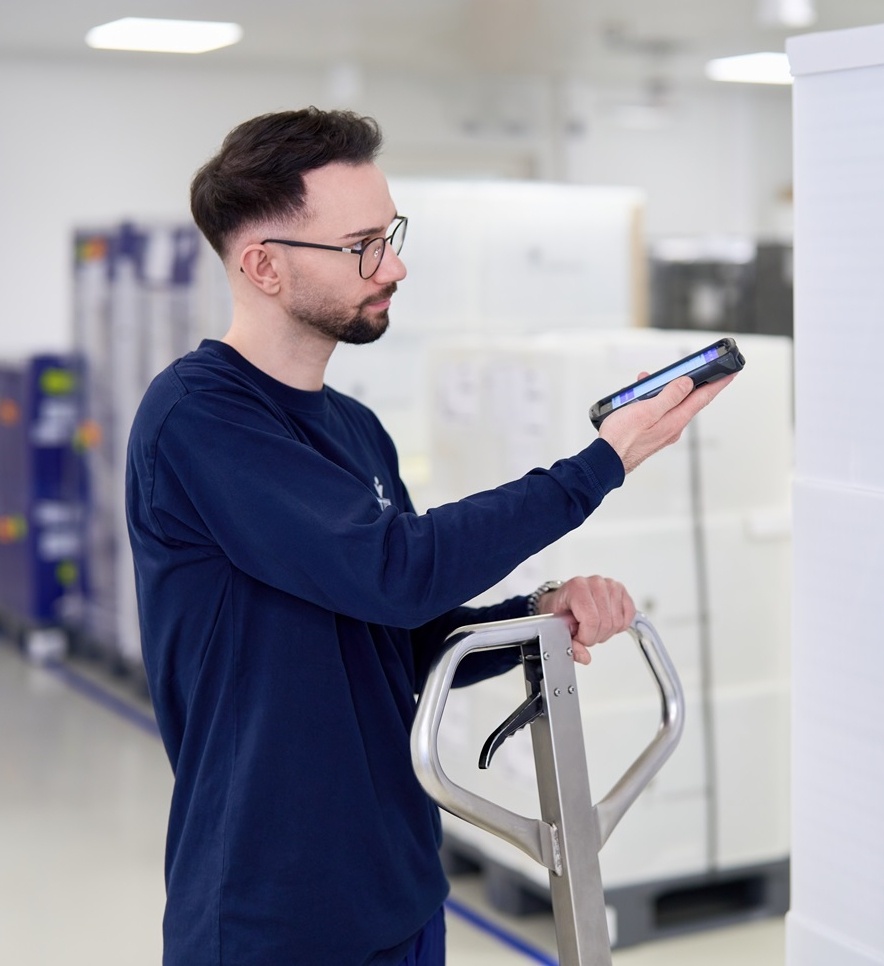
At Production Logistics, we are the link between the warehouse and production. Goods are removed from the warehouse, loaded onto trucks, and delivered to our site. We inspect pallets for damage, check batch and delivery numbers, reconcile the quantities and make sure everything matches the production order. We only store the goods temporarily at our site once everything is in order. Our system plays a key role: We scan the pallet and the assigned parking space. This way, production can instantly see where the goods are located and start the next steps, like bringing them into the controlled area.
High responsibility on the job
Many underestimate the huge responsibility that I carry at work. Sometimes I push a pallet carrying over 10,000 products—of immense value—around. Most importantly, it’s medicine. Knowing that those products can help people gives my job a whole new meaning.
Focus on people
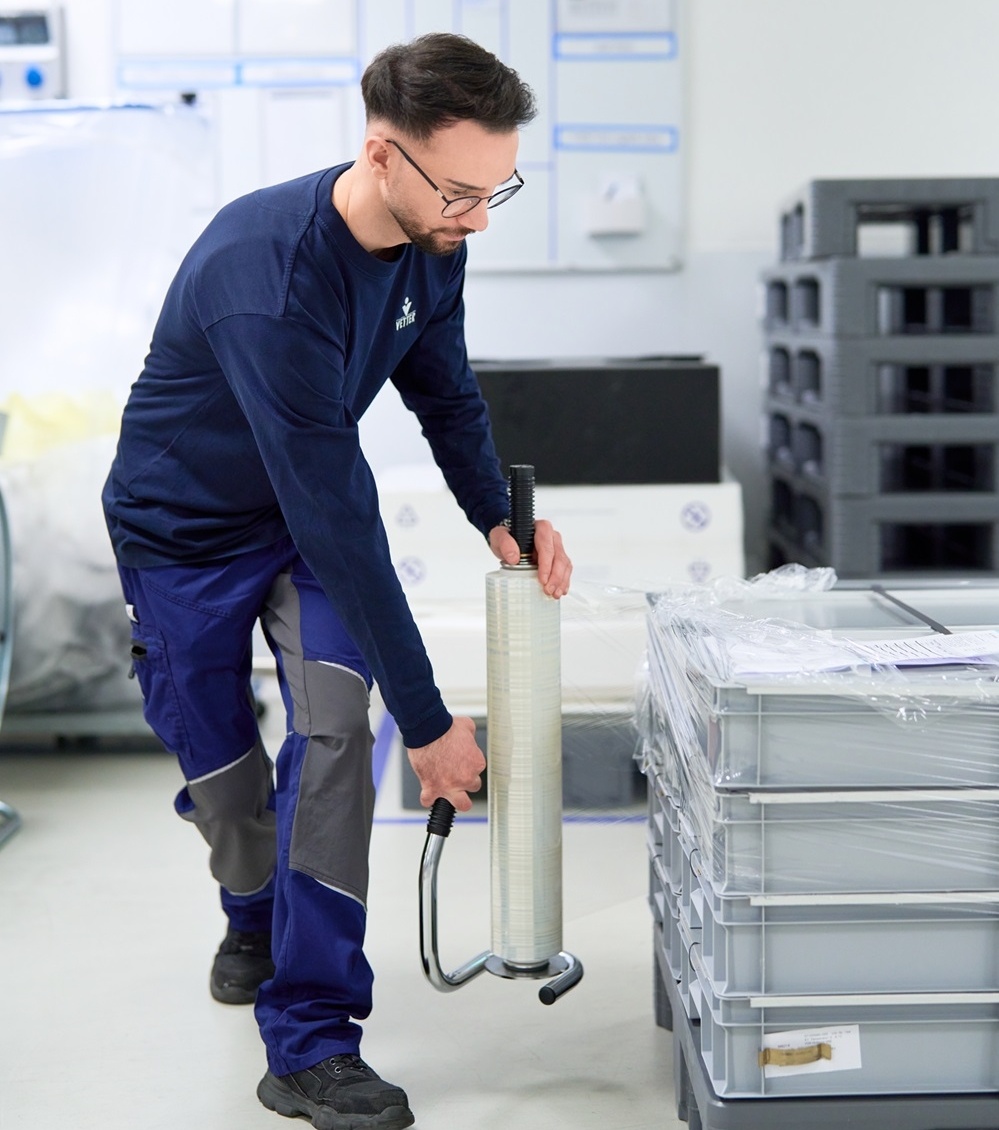
Hard manual work is rare at Vetter because we use tools like pallet trucks, forklifts, and the ErgoPack—a strapping system that helps you secure pallets without having to bend constantly. I was impressed by how clean everything was right from the start: instead of being dusty and dirty like in my previous logistics job, everything here is neat and tidy.
Want to become a Production Logistics Specialist?
Training and professional experience in warehouse logistics are a good foundation for the job. And in my opinion, three things are particularly important:
- Attentiveness: We check, scan, and document—you have to be focused.
- Organizational skills: Space isn’t limitless, so we focus on working efficiently and using space wisely.
- Flexibility: Tasks change, shifts change—and sometimes you have to react quickly.
A forklift license is definitely helpful. I already had mine from my training. And if you can work shifts and like variety, you've come to the right place.