
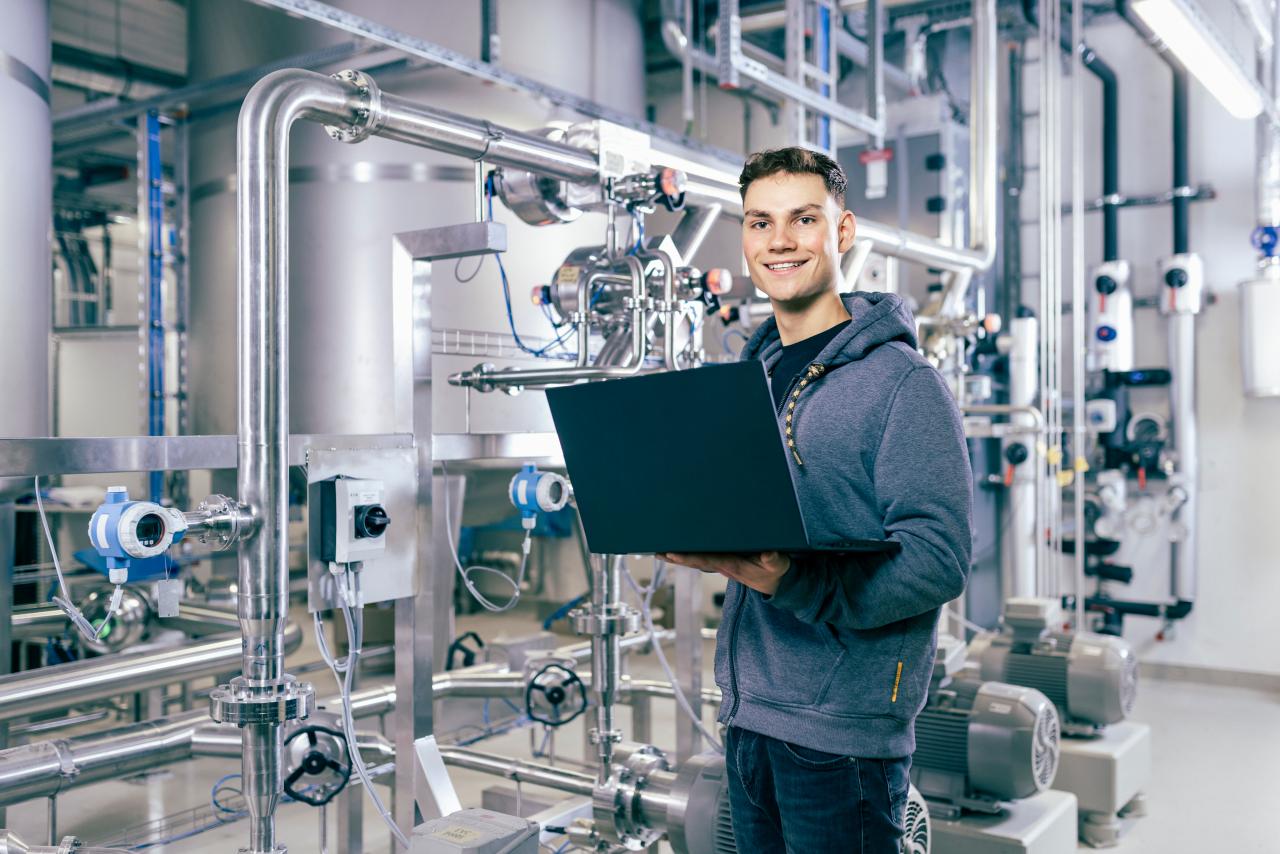
That's how I joined Vetter
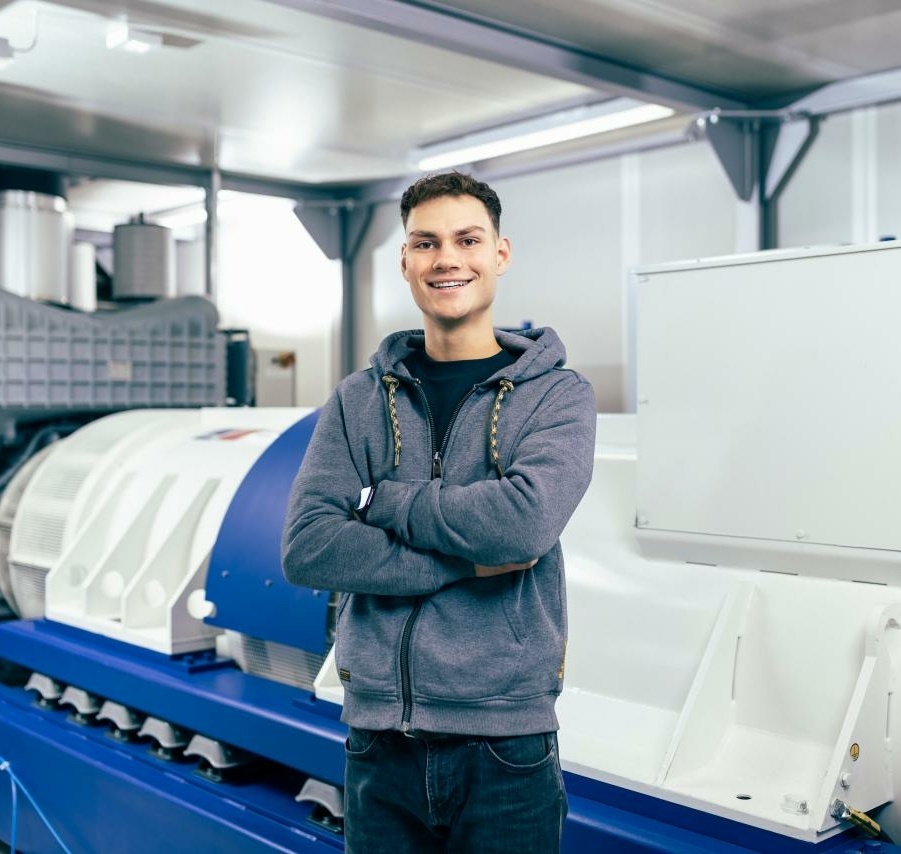
I got my first insight into Vetter during a school internship as part of career orientation. That was right up my alley. I was fascinated by both the pharmaceutical field and technology. I found it exciting to combine the two. That's why I decided to pursue an apprenticeship as a Mechatronics Technician at Vetter. During my apprenticeship, I realized that I was particularly fascinated by the aspects of electrical engineering. So, after I graduated, I applied for a job in Electrical Engineering — and got the position.
This is what my typical workday looks like
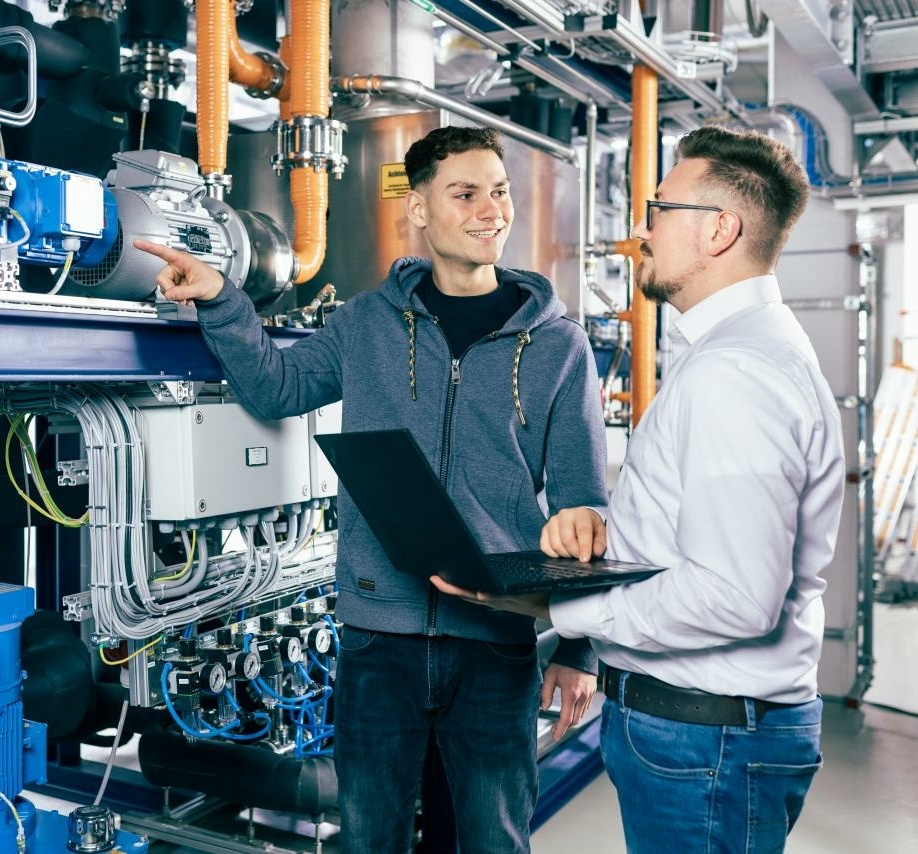
Thanks to flextime, I typically begin my workday between 7 and 8 a.m. at Vetter West in Ravensburg. First, I check the incident portal to get an overview of the technical issues that occurred overnight and that still require action the following day. My team and I are the first point of contact for electrotechnical issues and problems that occur during production. In other words, we step in whenever a technical issue — such as a malfunction in the PLC program — cannot be resolved immediately, or when specialized electrical engineering expertise is required, for example, in the case of defective sensors, defective power supplies or the replacement of frequency converters and drives.
Sometimes we work alone and sometimes together.
I use my laptop and a PLC program to localize the error. Sometimes all it takes is replacing a single part and the system is up and running again. In addition, we support technical modifications and optimizations to the systems.
What it takes
A passion for technology, a love of troubleshooting, and the motivation to systematically get to the root of problems are the most important requirements. Experience in the fields of automation and control technology is also a plus. And maybe you've already had some initial exposure to drive technology — that would be helpful, too.
What I like best about my job
I work on state-of-the-art production lines, face new challenges every day and constantly switch between office work and hands-on work right at the systems. Because I work across the entire site and collaborate with a wide variety of departments, I quickly built up a large network within the company.
Being on call also adds variety to the job. On those days, I work four hours and remain on call after my colleagues have finished work in case a technical issue arises anywhere on site. Some problems can be resolved remotely; for others, I go to the site. In total, we cover about 30 to 50 days of on-call duty per year — with additional compensation, of course. But there is no need to panic: If you join us, we'll make sure you're fully trained before you're on call for the first time.
So, what's next for me?
During my time in Electrical Engineering, I continued to develop my professional skills. I'm currently pursuing advanced training to become a Technician specializing in automation technology. This has already allowed me to qualify for an engineering position at Vetter.