Innovating internal cold chain transportation: Vetter’s new mobile freezer solution

by |


by |
In aseptic manufacturing, maintaining a reliable cold chain isn’t simply a technical requirement—it’s essential to protecting product integrity and supporting regulatory compliance. That’s especially true at Vetter, where 75% of the active pharmaceutical ingredients (APIs) we process must be stored and transported at temperatures between -15°C and -80°C.
Historically, most pharmaceutical cold chains have relied on the same essential cooling resource: dry ice. While effective and compliant, relying on this substance has always come with operational tradeoffs: recurring purchase and shipping expenses, maintaining and refrigerating specialized storage units, and potential workforce exposure to a hazardous, sublimating material.
At Vetter, we’re tackling those challenges with an innovative solution that’s now in its implementation phase: A mobile, actively cooled freezer system designed to advance our processes for transporting temperature-sensitive APIs between our facilities. Here’s a closer look.
Like many aseptic manufacturers, Vetter’s own internal transportation processes have long relied on dry ice to keep our customers’ sensitive drug substances at ultra-low temperatures during transportation. To move frozen APIs between facilities, our logistics personnel use qualified shippers with dry ice.
Though effective and reliable, this established approach to cold chain management poses several challenges.
While this method is effective, validated, and compliant, it comes with several well-known challenges: These include fixed delivery schedules that can affect flexibility, safety considerations for employees exposed to CO2 and rigid, time-sensitive, manual handling processes with limited potential for digitization.
At Vetter, these limitations prompted a cross-functional initiative to rethink how we transport temperature-sensitive API between our facilities.
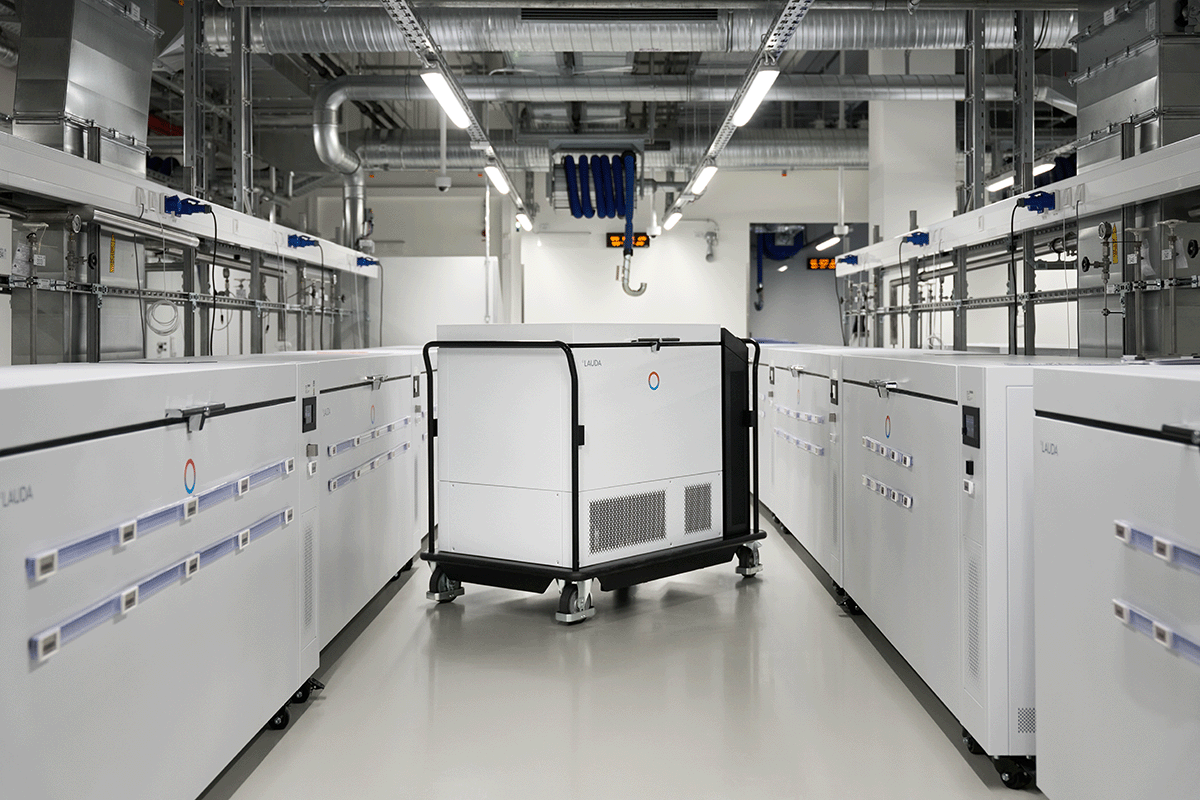
Our multidisciplinary program delivered far more than process refinements. It resulted in a decisive break from the status quo: A brand-new technological concept that fundamentally reimagines how we transport frozen API at Vetter.
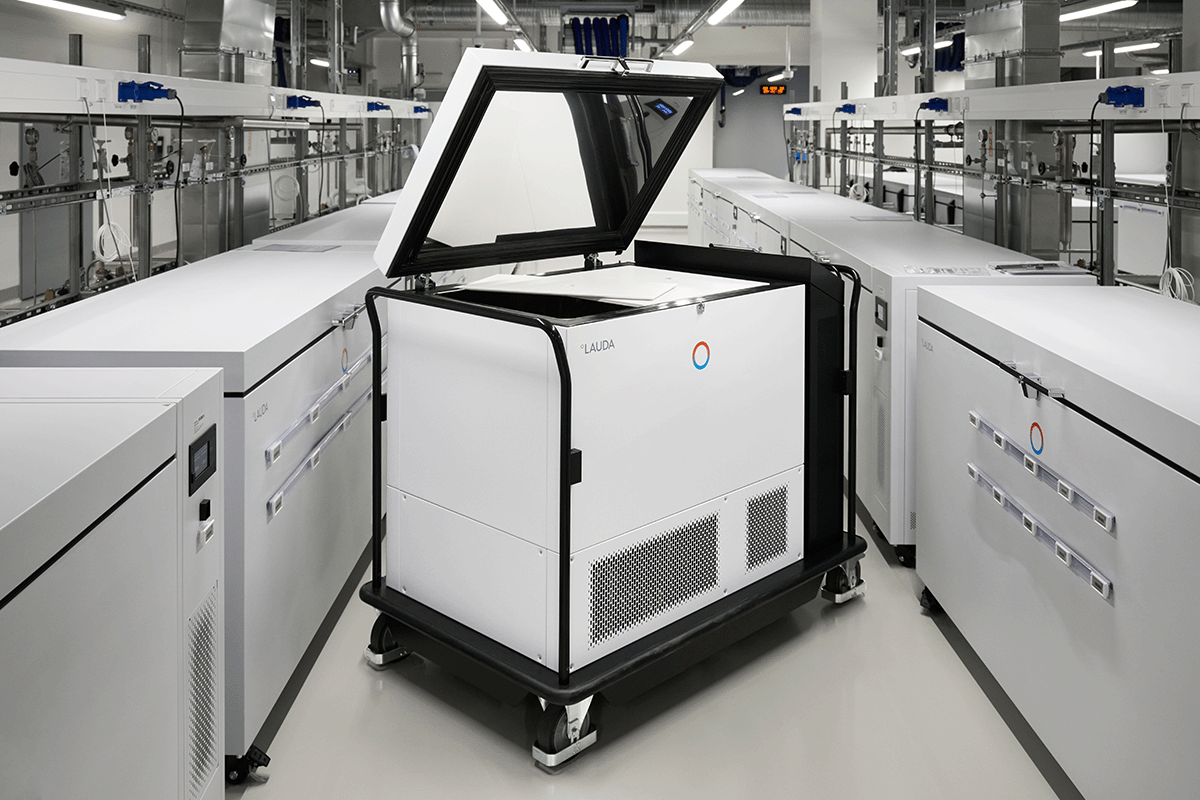
Purpose-built to meet GMP standards and developed in close collaboration with a specialized manufacturer, this new system replaces dry ice-packed rolling containers with fully mobile, self-contained, electrically powered cooling units. These specially designed freezers maintain temperatures between –80°C and –50°C and can operate autonomously up to four hours on battery power. For longer transport durations, each unit can also be connected to direct power sources for sustained refrigeration.
Audit-ready digital capabilities come built-in too: Each freezer is equipped with dual temperature sensors that enable data logging and secure transmission to Vetter’s IT system, designed to support compliance with 21 CFR Part 11 and seamlessly integrated into Vetter’s digital infrastructure.
For added security, the mobile freezers also connect to a site-specific alarm system that provides both acoustic and visual alerts in the event of a malfunction.
At every step from concept to rollout, this new system has been rigorously planned, designed, and extensively tested according to stringent internal quality and validation standards.
After its inception, the mobile freezer project proceeded to in-depth feasibility studies, concept development, and requirements analysis, with deployment of the first production-ready unit in early 2025. From start to finish, the development program was a collaborative effort that spanned numerous teams and functions at Vetter.
Within Vetter, our core project team worked closely with production and the equipment manufacturer to verify that this new solution provided a viable and valuable solution to a specific operational need. Hands-on customer input also helped directly shape the design and functionality of the freezer system.
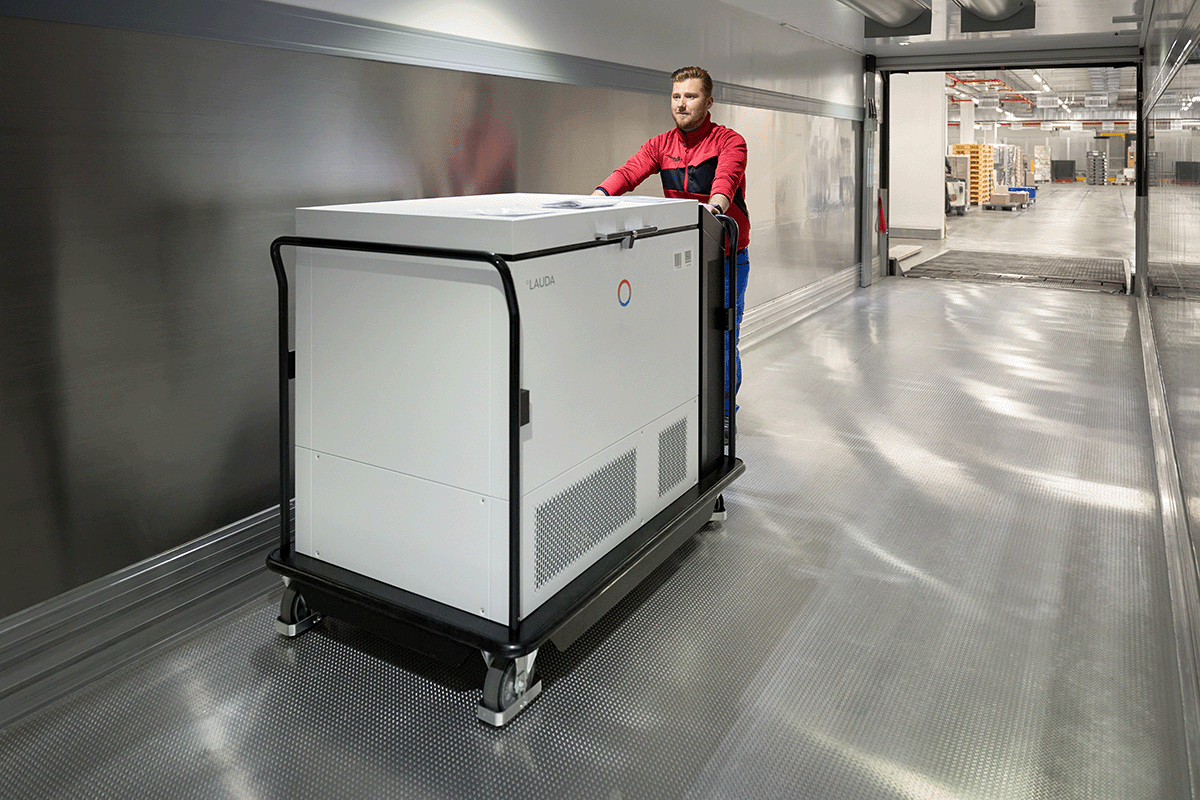
Together, these contributors produced an innovation that’s poised to advance our internal cold chain operations in multiple important ways:
For our workers, customers, and organization, these advantages represent valuable steps forward in our ongoing effort to operate efficiently and responsibly. Our logistics teams are excited to see the positive impact on day-to-day operations when the new freezers soon support their first Vetter customer.
As we prepare to scale this new solution, we’re excited to see it support our broader effort to leverage intelligent systems that support safe, efficient, and sustainable aseptic production.
Smart cooling technology, robotic sorting, or remote service enablement, each innovation we adopt plays an important role in keeping Vetter at the forefront of aseptic manufacturing. By rethinking our internal logistics, we are not only improving operational efficiency but also reinforcing the precision, quality, and environmental responsibility our customers expect us to deliver.