The Self-Injection Boom: Vetter’s Strategic Approach to a Dynamic Market

by |

by |
The global parenteral market is experiencing a sustained boom in self-injection devices: Convenient, user-friendly options that are increasingly preferred by providers and patients alike.
While autoinjectors and pens add significant value to injectable products, they also introduce new technical, regulatory, and sustainability requirements that CDMOs and their customers must manage. Here’s a closer look at some of the key trends shaping this fast-growing market, and how Vetter is navigating them.
Driven by our rigorous long-term planning processes, Vetter was fully prepared for a key demand this evolving market has made: Simultaneously enabling both scale and efficiency.
Shifting to platform device technologies is key to achieving that goal. With products like autoinjectors or pens, platform devices offer clear advantages: faster development, industrial scalability, and a more efficient path through regulatory pathways. At the same time, they also reduce production complexity and enable us to handle a wide variety of products with minimal process expansion.
Close cooperation with device manufacturers and equipment suppliers is essential here. By working with established suppliers and validated technologies, Vetter can design robust processes, shorten time-to-market, and provide customers with a high degree of planning reliability.

At the same time, several trends in product formulation and patient preferences are also driving important shifts in self-injection device design:
Environmental responsibility has become a core priority for self-injected products and their manufacturing. Growing societal awareness and tightening regulations are pushing sustainability to the top of the list for drug owners and manufacturers alike.
Many stakeholders across the value chain are looking not only at process optimizations but also at packaging and device concepts. Paper-based or plastic-reduced packaging, reusable device elements, and more sustainable raw materials are all gaining attention.
And yet, the path to scaling environmentally responsible formats still has many uncertain steps. Unclear regulatory frameworks, higher material costs, and the resource-intensive nature of self-injection devices create real challenges. Often, changes require modified processes, new suppliers, and additional validation work.
In Vetter’s experience, the key to success lies in early and close collaboration along the value chain. When drug owners, CDMOs, device manufacturers, and packaging suppliers come together at an early stage, we can jointly identify concepts that reduce waste, increase recyclability, and still fulfill all quality, safety, and regulatory requirements.

Adding further complexity, the self-injection market has also rapidly split into two distinct tiers: on one end, a new generation of high-volume blockbuster products, and on the other, an active pipeline of highly specialized orphan drugs.
Seeing this shift, many drug owners have found even greater value in Vetter’s flexible infrastructure, which was designed with versatility in mind.
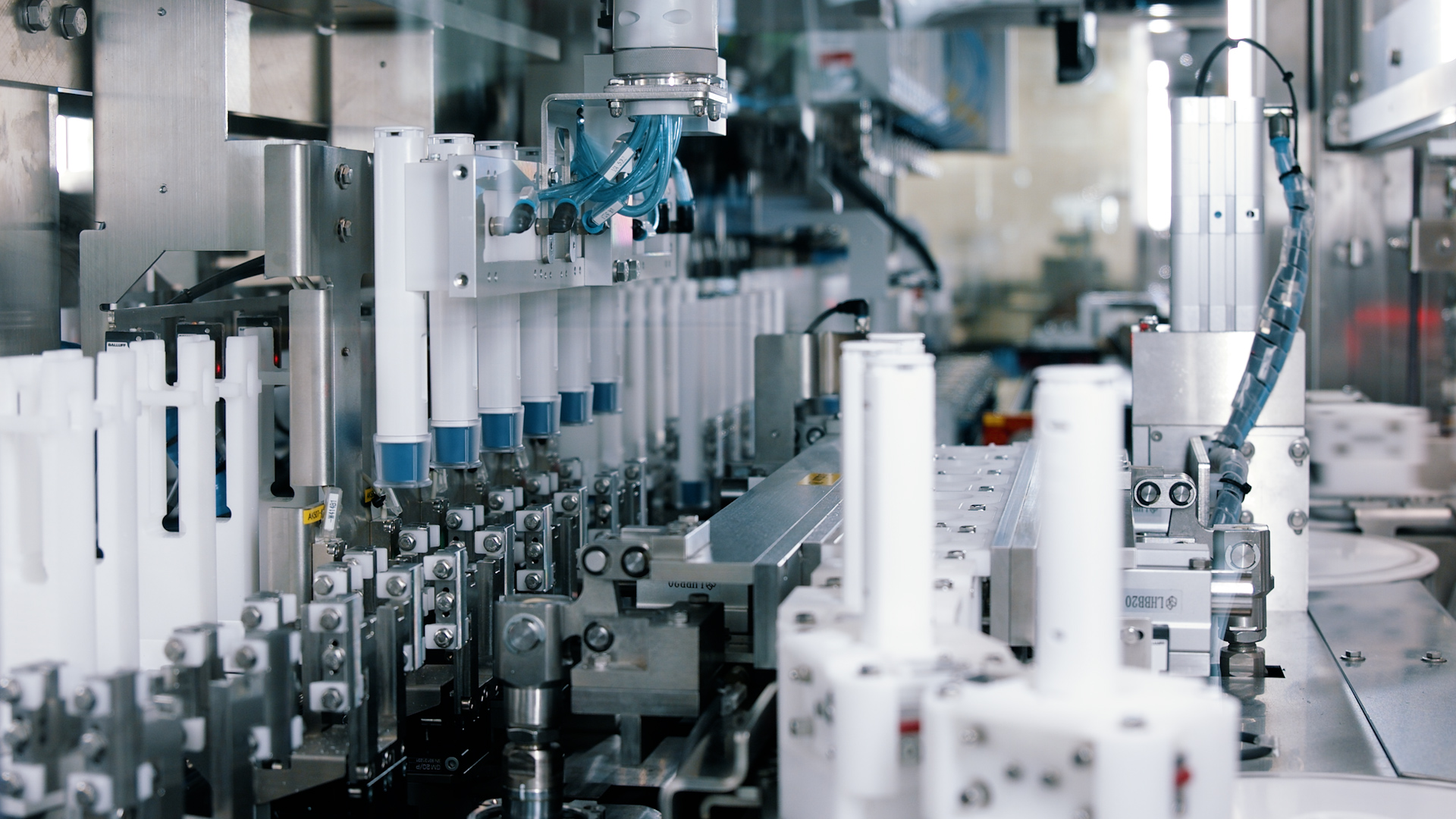
In our production hub, scalable assembly lines enable a smooth transition from clinical to commercial volumes with minimized tech transfer effort and consistent quality. Smaller batches can be produced on flexible, modular lines with varying degrees of automation — for example, small-scale autoinjector lines that assemble units individually and can be easily adapted to new device types. Larger commercial volumes can then be handled by fully automated, high-throughput systems.
In combination, these capabilities help our customers reduce risk, accelerate timelines, and maintain high quality across the full product lifecycle. As demand for self-injected therapies continues to grow, we’re excited to see how our forward-thinking infrastructure will support our customers’ long-term success.
Reach out to our team of device assembly & packaging experts to start the conversation about how we can support you. They’ll be happy to share how our specialized capabilities and resources can adapt to your specific needs.