Automating aseptic processing: Routes to robotics in the cleanroom

by |


by |
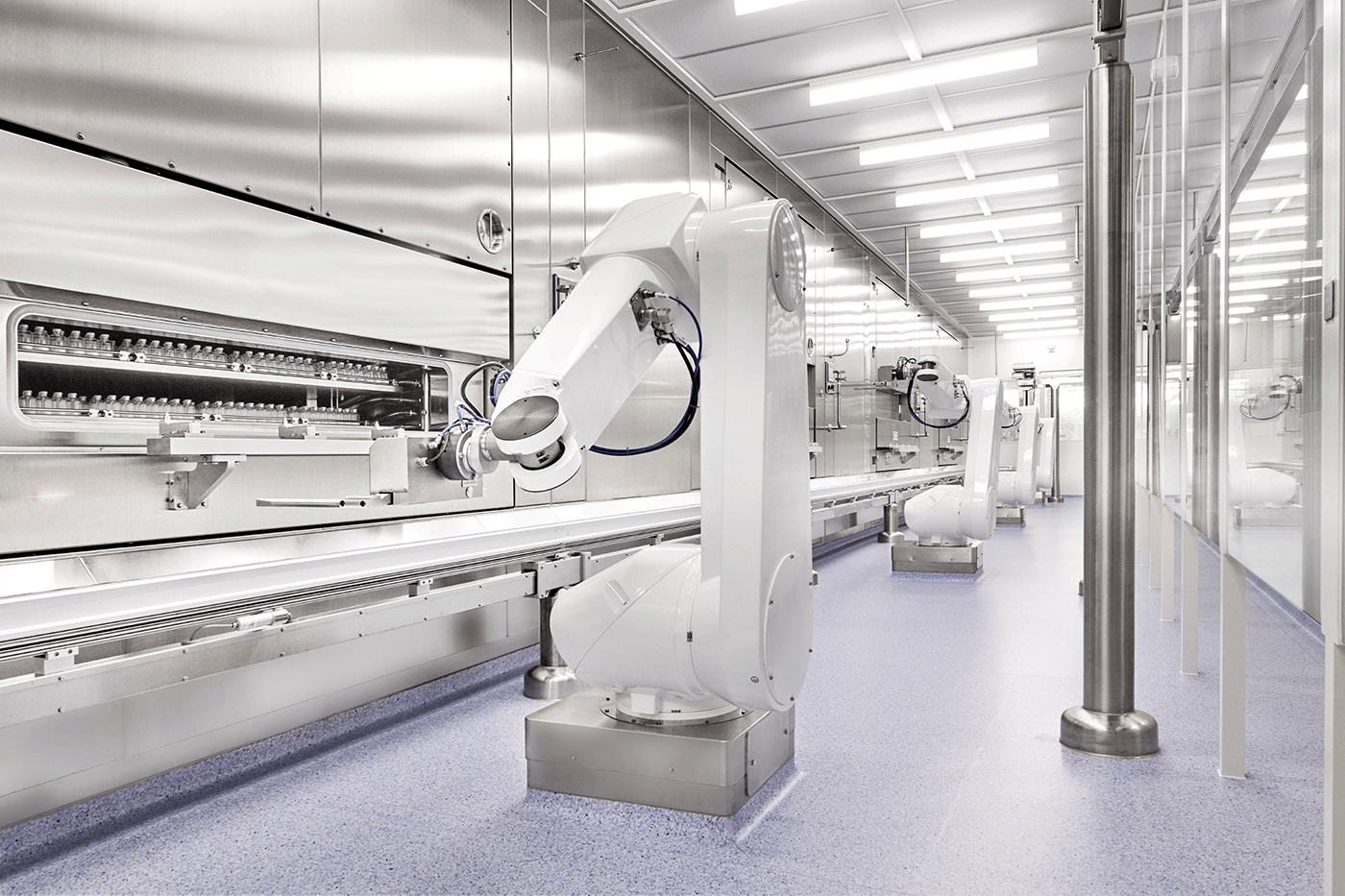
Automation, once regarded primarily as a strategic option, is increasingly becoming an operational necessity. Multiple factors are driving this shift, but all share the same focus: reducing human intervention in the cleanroom. After all, human activity remains a significant potential source of variability in sterile manufacturing environment.
Here's a closer look at what's driving robotic adoption in aseptic filling, how CDMOs are deploying it today, and where the technology may be heading next.
These separate forces are converging on aseptic manufacturers in parallel, and each points toward automation.
First: ever-increasing regulatory expectations. Revisions such as EU GMP Annex 1 sharpen expectations around contamination control, favoring automated handling. The guidance describes all requirements for loading patterns or automated transfer systems as 'highly recommended'. At commercial scale, designing human intervention out of the cleanroom is the most practical way to achieve compliance.
Second, of course, is economics. Development and production costs continue rising, supply chains remain sensitive to disruption, and batch sizes are trending smaller and more varied. Sponsors increasingly require greater flexibility while maintaining consistently high quality standards, and automation can help address both expectations.
Third is the industry workforce. Skilled personnel are in short supply across the sector, and cleanroom work — with its strict gowning and contamination controls — remains a challenging environment to staff. Here, robotics helps in a way that's often misread: it redirects expertise rather than replacing it. Repetitive and physically demanding activities can be automated, enabling trained professionals to focus on oversight, analysis, and decision-making.
Naturally, that raises a practical question for any CDMO considering robotics: where should implementation begin?
In practice, robotic systems are being introduced into aseptic facilities through three main routes. The most suitable approach depends on the site’s existing infrastructure, processes, and objectives.
are the most straightforward of the three: automation is incorporated from the first drawing and positioned against regulatory expectations before they become mandatory. Modern filling lines combine automated material handling with robust contamination control, reducing human intervention and supporting consistent environmental performance. Automation becomes a built-in characteristic of the manufacturing process itself.
retrofits are more common but more demanding, since upgrading active production environments is complex and challenging. Even so, a workable playbook has emerged: use of proven robotics and parallel testing environments that validate interfaces and performance before installation. For many facilities, retrofits are becoming essential to maintain compliance and competitiveness.
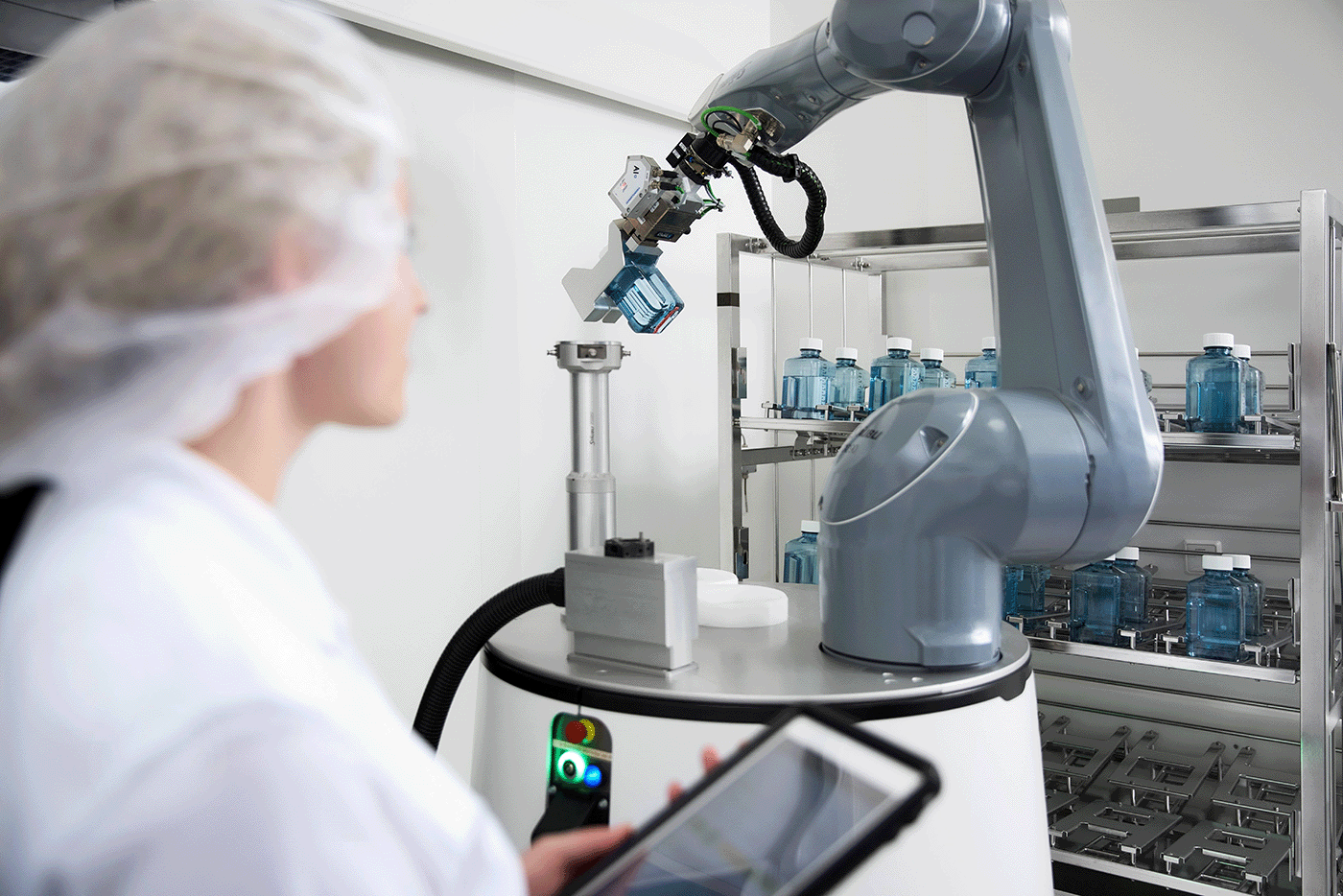
targets labor-intensive manual activities by assigning repetitive tasks to automation. A collaborative picking system that sorts loose syringes into trays is a good example in production. Another example is the thawing of bulk drug substance, which may require precise agitation at defined intervals over several hours. An automated guided vehicle carrying a robotic arm can run that cycle and document each step, improving consistency while reducing the need for manual intervention.
Automating mobility within the cleanroom is a growing focus for today’s development efforts, and may be where the next round of standardization takes shape. The underlying drivers remain the same: evolving regulatory expectations, the objective of reducing manual intervention, and growing demand for automation in highly controlled aseptic environments.
Introducing a mobile robot to a Grade A/B environment naturally calls for a purpose-built design, and the requirements are instructive. Such a machine typically needs a compact footprint and a modular architecture that serves more than one use case. Every sensor must be fully enclosed inside the machine’s body. It also has to be thoroughly cleanable, with straightforward wheel access and resistance to vaporized hydrogen peroxide decontamination — all while operating safely alongside people.
Meeting every such requirement in a single machine is challenging, and has kept mobile robotics on the outskirts of the aseptic core for some time. That's now changing, as cleanroom-grade platforms engineered specifically against these constraints are now reaching the market.
Prioritizing modularity is key. A common base platform can be configured for different movement types, cleanroom grades, and applications. Thus, one validated platform can cover many use cases — versus a purpose-built machine per task. For a sector with diverse and shifting product portfolios, this flexibility is valuable because it allows for automation without the need for a fresh qualification exercise for every new application.
A further area of innovation is the way human interventions themselves are performed. For instance, robotic telemanipulation solutions could support a shift to gloveless isolators.
With these technologies, a robot arm can perform most routine tasks automatically, but still switch to a manual mode when operators need to perform non-routine tasks. In the event of a fault inside the isolator, the operator can work through the robot rather than a glove port, keeping human hands out of the sterile zone even when hands-on work is called for.
Add AI-driven monitoring and predictive maintenance, and the direction becomes clear: robotic and digital platforms operating as a single, coordinated system. The robots manage the repetitive work, while experts focus on orchestrating the process.
The future of aseptic manufacturing will combine robotics, digital technologies, and human expertise. To discuss emerging trends and developments in sterile manufacturing, reach out any time to start a conversation.